
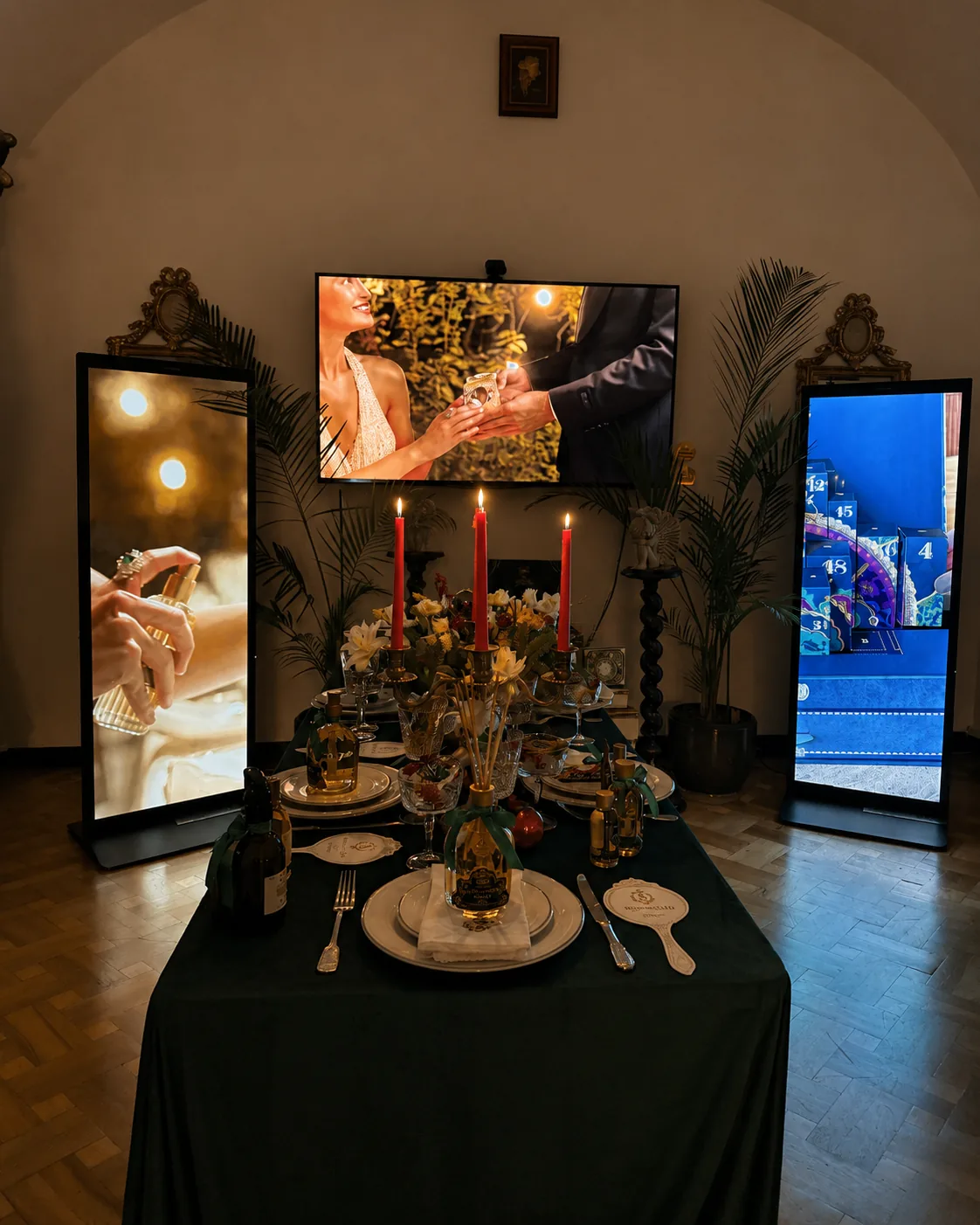
What remains of a business dinner only shows the next day: a decision taken without haste, a relationship settled, an answer you would not have received in a meeting room. That is why you prepare a business dinner more like a negotiation than a party. Below is what matters in practice: how many guests, how to seat them, how long the evening lasts and when to talk business.
Organising a business dinner starts with the number of guests
The number at the table decides what kind of evening you will have. Up to eight people, there is usually a single conversation and everyone hears everything that is said; this is the format in which decisions get made. Between ten and twelve, the common thread has to be held deliberately, usually by the host. Above fourteen, the table breaks into parallel conversations: you have a relationship dinner, not a working discussion.
- Do not bring more people than your counterpart. If they bring three colleagues, do not turn up with seven; the imbalance feels like pressure.
- Everyone at the table has a role — who opens, who knows the figures, who knows the person. Guests brought along “just to be there” use up conversation time.
- Separate the decision from the dinner if there are many guests. The narrow discussion takes place separately, in a small circle, and the dinner remains the relationship part.
At Vila Tătărescu, for example, the salons seat up to 80 guests, and the private discussion moves to the Premier’s Library, in a board format for 2–6 people. A large dinner and a closed discussion are two events, even if they happen on the same evening.
Seating: make the plan in advance, not at the door
The costliest improvisation is letting guests choose their own seats. Make the seating plan the day before, with discreet place cards: nobody hesitates in the doorway, and you decide who talks to whom for three hours.
- The host does not sit at the end of the table, but in the middle of the long side, from where they can hear both halves. The main guest sits on the host’s right.
- Do not put “us” on one side and “them” on the other. It is the picture of a negotiation, not a dinner. Alternate the people from the two teams.
- Seat the pairs who really have something to discuss next to each other. At a long table, two people seated across from each other but a few places apart never get to talk.
- With fewer than twelve guests, a round or oval table works in your favour; a rectangular one isolates the ends.
- Visit the venue and listen to the acoustics. If the room forces you to raise your voice, you have lost half the conversations.
Duration: state the end time in the invitation
Busy people accept a meeting more readily when it has an end, so write the time span in the invitation, not just the start time. A rhythm that works: half an hour of standing welcome, with a drink, then the meal, with the main course in the middle. After about three hours at the table, attention usually drops for everyone.
If guests have a flight the next morning, shorten the programme from the start and tell them: a short, clear dinner leaves a better impression than a long one kept up out of politeness, and the host gives the signal to end by being the first to stand up.
The menu, allergies and restrictions
Ask everyone about restrictions, in one line, when they confirm attendance: allergies, medical diet, fasting, vegetarian or vegan, alcohol. The answers go to the kitchen together with the seating plan, so that the right plate reaches the right person, without announcements out loud.
- A set menu with two or three options is better than choosing on the spot: the service keeps a single rhythm, and the conversation is not interrupted three times.
- Avoid dishes that are hard to eat elegantly: whole shellfish, long pasta, bones, anything that needs your hands.
- Measured portions. After a heavy main course, nobody negotiates anything any more.
- Alcohol is offered, never pressed, and the non-alcoholic alternatives are prepared with the same care.
- Water on the table from the start, coffee at the end. A short dessert closes the dinner better than one more course.
Who speaks, and when
The host opens with one minute, not a speech: thanks, the reason for the meeting, the approximate end time. The difficult subject does not come up over the aperitif, but after the main course, once people have settled in and got to know each other.
If the meeting has an ask — a signature, a price, a partnership — state it once, clearly, then let the silence do its work; repeated with every course, the ask becomes pressure. Do not bring presentations to the table and do not open laptops: if a screen is needed, the group moves to another room.
The host also has a second duty: to bring quiet guests into the conversation, with a question addressed to them directly. If one of the guests does not speak the language of the majority, the conversation is held in the language everyone understands. The toast, if you make one, is short, and there is only one.
Discretion: phones, staff, documents
Discretion is settled before the guests arrive, on three concrete points: phones, instructions for the serving staff, and documents.
- Phones do not go on the table. The host sets the tone by putting their own phone away. Anyone expecting an important call says so at the start and steps out of the salon.
- The staff receive their instructions in advance: when to serve, when not to enter the salon, which agreed signal stops the service. A course brought in during a sensitive sentence can end a discussion.
- Documents are not read over the plate. Contracts are signed in another room, before or after the meal.
- The venue matters more than you think. In a full restaurant, the next table is a few steps away. When the subject is sensitive, choose a space hired in its entirety, where the evening belongs to a single group.
A separate room for the conversation afterwards
The most useful ten minutes often come after dessert, between three or four people; without somewhere to take them, they are lost at the cloakroom. Book a second, smaller room from the start — a quiet salon, a library, a covered terrace — where the sensitive point can be picked up again without an audience, or where whatever needed signing gets signed.
One example of this format: Vila Tătărescu’s Cigar Lounge — a private experience for up to 12 people, from 18:00, booked separately from the dinner.
Common mistakes
Almost all the evenings that go wrong are spoiled for the same few reasons, and none of them has to do with the kitchen; they all come down to preparation.
- Too many guests for the stated purpose of the evening.
- No seating plan and, with it, no control over the conversations.
- The difficult subject raised over the aperitif, before people have got to know each other.
- An invitation with no end time, and an evening that drags on until the first tired guest leaves.
- Dietary restrictions discovered on the night, when the plates are already on their way.
- A host who talks more than all the guests put together.
- No room for the smaller conversation afterwards.
- Reconfirmation left to the last day, instead of a message two days before: the time, the address, parking, the dress code.
The short list, before you send the invitations
Settle four things on paper before the invitations go out, because afterwards they are hard to change without explanations.
- The purpose of the evening, written in one sentence: relationship, decision or thanks.
- The guest list and each person’s role, on both sides.
- The time span, stated in the invitation.
- The name cards, prepared according to the seating plan.
A business dinner should not be improvised, yet the part most often improvised is the budget. If the meal goes on company expenses, agree the tax treatment and supporting documents with your accountant. Venues of this kind give their rates on request, depending on the date, the number of guests and the menu — ask for a quote early.
Dinner is served in the salons, and the talk afterwards can continue in the Cigar Lounge.